Texas A&M System Home to Nation’s Fastest University Supercomputer
•
min. read
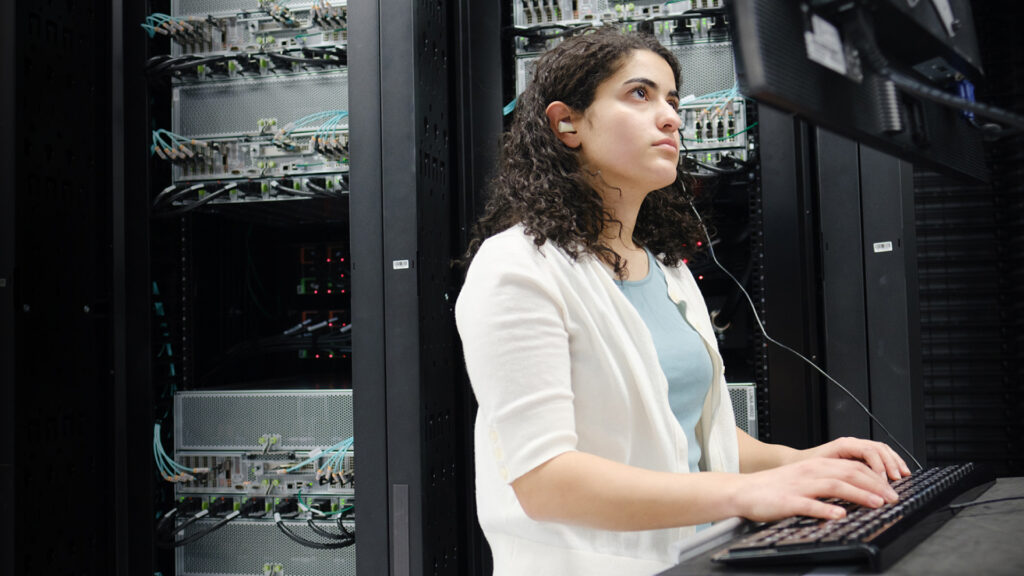
BRYAN-COLLEGE STATION, Texas — The Texas A&M University System’s new VISION supercomputer is the most powerful university supercomputer in the United States, according to the June 2026 TOP500 list, which ranks VISION No. 66 among the world’s fastest computing systems.
“We did not fund VISION for bragging rights. We funded it because Texas needs answers faster,” said Robert L. Albritton, chairman of the Texas A&M University System Board of Regents. “This supercomputer gives researchers across the A&M System the power to speed up drug discovery, strengthen disaster response, improve agriculture, advance energy research, support national security and prepare students for an economy being reshaped by artificial intelligence.”
Ranked No. 66 in the world, VISION now stands in elite company among national laboratories, major research institutions and global technology leaders. Texas A&M University President Susan Ballabina said VISION will help faculty and students turn ambitious research questions into results faster.
“VISION gives our faculty and students access to the kind of computing power that changes what is possible,” Ballabina said. “It will help researchers train larger models, process more data, test more ideas and move faster on work that can improve lives. Just as important, it gives students hands-on experience with the advanced tools shaping the future of science, industry and public service.”
Chancellor Glenn Hegar said VISION shows the power of the A&M System to make major investments that serve every university and agency in the System.
“This is exactly why Texas built a university system of this scale,” Hegar said. “VISION gives our 12 universities and eight state agencies access to computing power that most institutions could never build alone. It strengthens research, expands opportunity for students and gives Texas A&M another tool to solve real problems for Texas and the nation.”
The TOP500 list ranks the world’s most powerful supercomputers twice a year based on the High Performance Linpack benchmark, a standard test of computing performance. VISION posted 34.82 petaflops of measured performance.
The ranking validates the A&M System’s $45 million investment in advanced computing infrastructure, approved by the Board of Regents. But System leaders said the machine’s real value will be measured by what researchers, faculty and students do with it.
“VISION gives our faculty and students access to the kind of computing power that changes what is possible.”
VISION is an NVIDIA DGX H200 SuperPOD acquired through World Wide Technology, an NVIDIA channel partner. The system is housed at the West Campus Data Center at Texas A&M University and will support researchers across the A&M System.
The supercomputer features 95 NVIDIA DGX nodes, 760 NVIDIA H200 graphics processing units and fast storage built for data-intensive work. It will support projects involving machine learning, generative artificial intelligence, model training, image processing, graphics rendering, scientific simulations, robotics and autonomous systems.
Early work already shows the system’s potential. In one drug-discovery project, researchers screened more than 10 million compounds in about a week, using computing power that would have taken years in a previous environment.
That kind of speed can change the way researchers work. VISION can help teams test more ideas, train larger models, process more data and move from question to result faster than before.
The system also strengthens the A&M System’s ability to recruit top faculty, attract research partnerships and prepare students for fields increasingly shaped by artificial intelligence and advanced computing.
The A&M System announced the VISION investment in 2025 as part of a broader push to expand high-performance research computing. The system has been moving through testing and toward broader availability for researchers.
“Texas A&M has always served the state by taking on hard problems,” Albritton said. “VISION gives us another powerful tool to do that work.”