Regents Approve New Meat Science Center, Baseball Player Complex and Hart Hall Upgrades at Texas A&M

BRYAN-COLLEGE STATION, Texas — The Texas A&M University System Board of Regents on Thursday approved a slate of projects that, taken together, say something simple and unmistakable: this is a university system that feeds Texas, fields champions, and takes care of its students where they live.
The Regents approved construction of a new Meat Sciences and Technology Center at the RELLIS Campus, a major Player Development Center at Blue Bell Park for the Texas A&M baseball program, and a full modernization of the air-conditioning system at Hart Hall, one of the oldest residence halls on the College Station campus.
The new Meat Sciences and Technology Center is a $114.6 million investment that will replace an aging facility with a modern complex designed for teaching, research and agricultural extension. Funding will come from a combination of Permanent University Fund bonds, revenue-backed financing, and institutional funds.
The Player Development Center at Blue Bell Park, budgeted at $28.3 million, will feature expanded batting and pitching labs, sports medicine facilities, a home clubhouse, strength and conditioning spaces, and team meeting rooms. The project will be funded through a blend of philanthropic gifts and revenue-backed financing supported by future gifts.
The renovations to Hart Hall total $9.97 million and will be financed through revenue-backed debt supported by student housing income. The project replaces aging heating systems and individual window units with modern, energy-efficient air conditioning, fresh-air circulation and digital climate controls to improve student comfort and building performance.
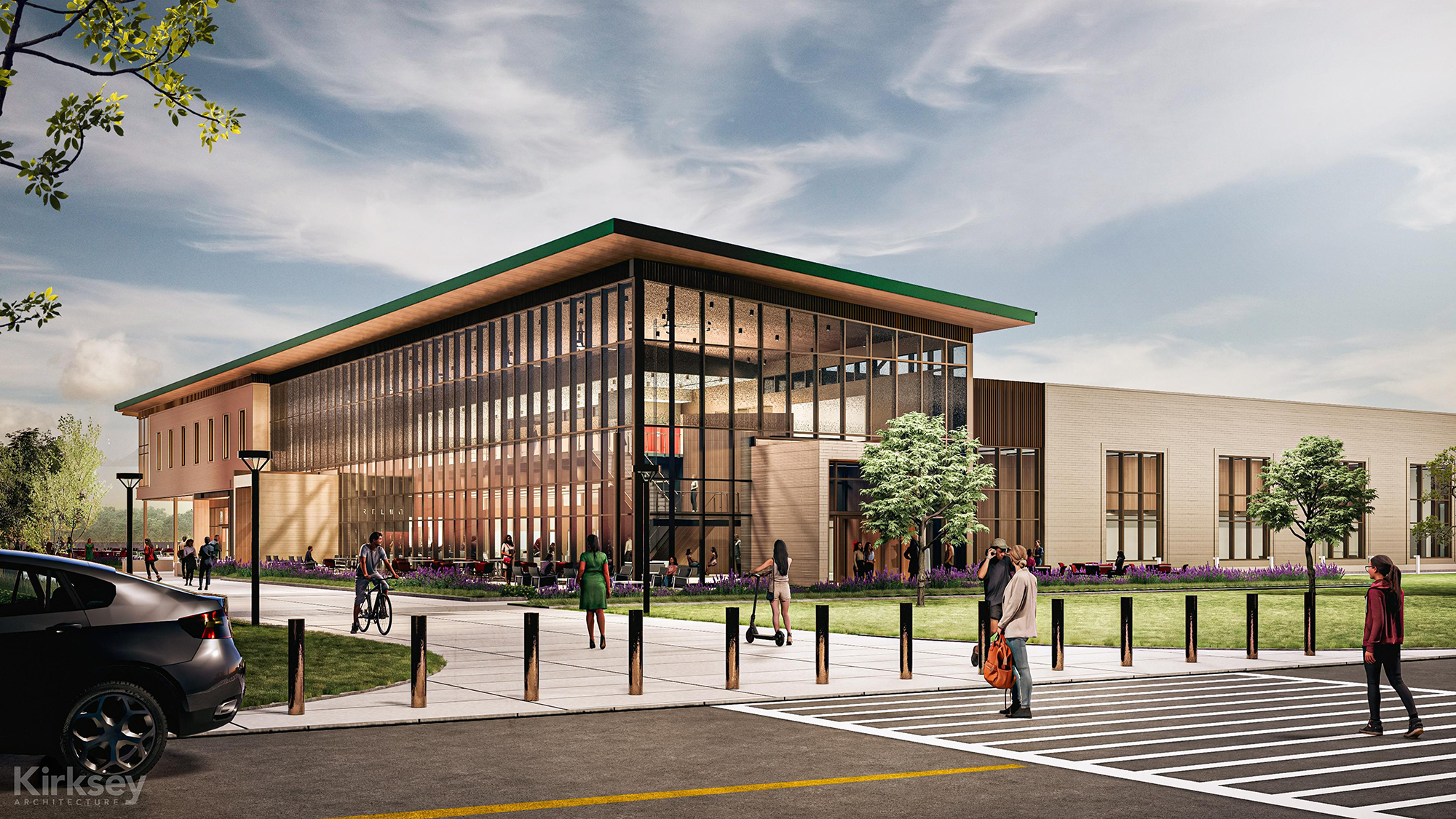
A rendering of the new Meat Sciences and Technology Center at the RELLIS Campus.
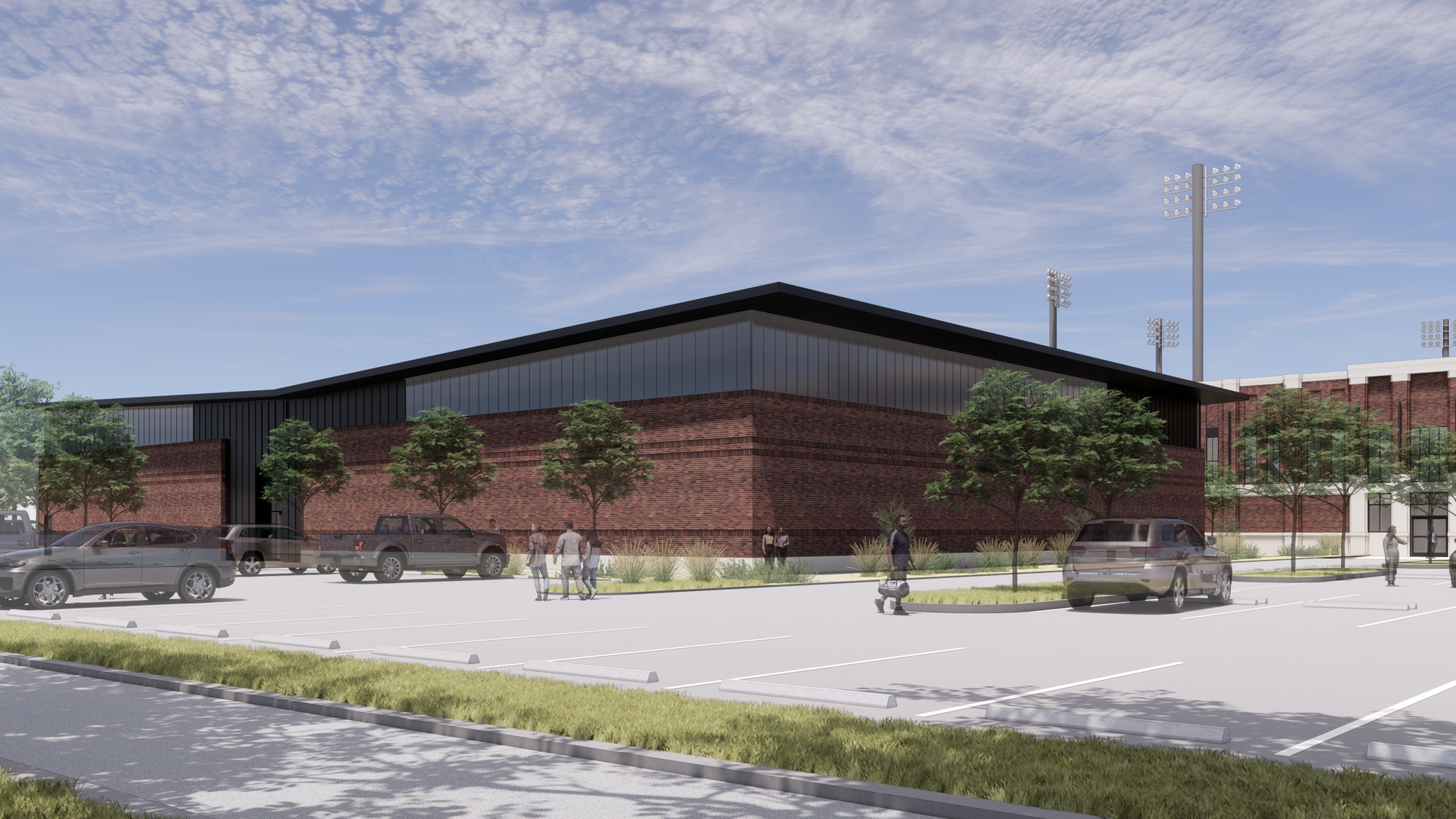
A rendering of the Player Development Center at Blue Bell Park for the Texas A&M baseball program.
“These projects reflect the mission and momentum of Texas A&M,” Chancellor Glenn Hegar said. “We are investing in the way we teach, the way we live, the way we train, and the way we serve. That is what an institution of this size and responsibility should do.”
Board of Regents Chairman Robert L. Albritton said the Board remains focused on stewardship and impact.
“We are being diligent and strategic,” Albritton said. “These are investments in students, research, communities, and the state’s economic future.”
Additional Projects Advanced Toward Development
The Regents also added several significant projects across the System to the long-range capital plan and authorized planning funds to begin design work:
- Renovate Building 1041 for the Gastrointestinal Laboratory (Texas A&M University) — $20.5 million planning total; $2.05 million approved to begin design. The renovation will expand one of the world’s leading small-animal gastrointestinal research labs and create flexible “swing space” to support future research relocations.
- West Campus Learning Commons (Texas A&M University) — $130 million planning total; $13 million approved for pre-construction work. Funding will come from Permanent University Fund bonds, revenue-backed financing supported by designated tuition, and institutional funds. The building will add approximately 1,400 much-needed classroom seats on West Campus.
- Mays Business Building Three (Texas A&M University) — $192 million planning total; $19.2 million approved to begin design. The project is supported by philanthropic gifts, revenue-backed financing, Permanent University Fund bonds, and campus funds, and will serve as the home for graduate business programs and applied digital learning studios.
- New Residence Hall (Prairie View A&M University) — $120 million planning total; $12 million approved to begin design. The project will be financed through revenue-backed debt supported by housing and auxiliary revenue, adding approximately 950 beds to support enrollment and student success.
- Parking Structure #2 (Tarleton State University) — $57 million planning total; $5.7 million approved to start design. Funded through revenue-backed debt supported by parking revenues, the five-level garage will replace surface parking displaced by new campus housing.
- Research & Innovation Building A (Texas A&M–Fort Worth) — $30 million approved for pre-construction services.
About The Texas A&M University System
The Texas A&M University System is one of the largest and most impactful higher education systems in the country, with an annual budget of $7.3 billion. Its statewide network includes 12 universities, a comprehensive health science center, eight state agencies, Texas A&M–Fort Worth and Texas A&M–RELLIS. The System serves nearly 170,000 students and reaches millions more through service, research and outreach programs each year. With nearly $1.6 billion in annual research expenditures, the System fuels innovation, supports communities and drives Texas’ economy forward.
Media Contact:
Chris Bryan
Vice Chancellor of Marketing and Communications
cbryan@tamus.edu