Texas A&M System Regents Authorize Up to $1.9 Billion in FY 2027 Bond Capacity
•
min. read
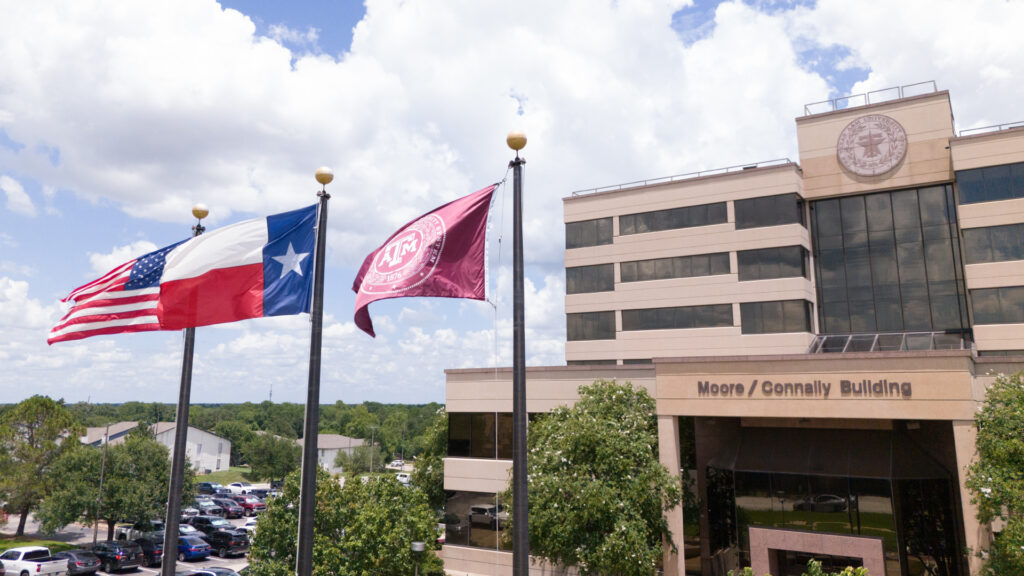
Separate authorizations provide flexibility for capital financing, commercial paper takeouts and potential refundings
BRYAN-COLLEGE STATION, Texas — The Texas A&M University System Board of Regents on Thursday authorized up to $1.914 billion in bond capacity for fiscal year 2027 to finance approved capital projects, convert short-term commercial paper into long-term debt and pursue refinancing opportunities when market conditions are favorable.
The two resolutions provide issuance authority through Aug. 31, 2027. They establish maximum amounts and do not represent a single bond sale or a commitment to issue the full amount.
“Texas is growing, and the A&M System has to be ready to grow with it,” said Robert L. Albritton, chairman of the Board of Regents. “These authorizations give us the flexibility to build what our students and our state need while maintaining the financial discipline that has earned the System top credit ratings. This is not a commitment to borrow every dollar. It is the ability to act when the need is clear and the market is right.”
The Permanent University Fund bond resolution authorizes up to $750 million for construction, renovations, property acquisitions and other Board-approved projects, as well as the conversion of commercial paper into long-term debt. The A&M System does not currently anticipate refunding outstanding PUF bonds during FY 2027. Debt service will be paid from the A&M System’s share of the Available University Fund.
The Revenue Financing System bond resolution authorizes up to $1.164 billion. Of that amount, $971 million may be used for capital needs and commercial paper takeouts. An additional $193 million provides capacity to refund eligible outstanding debt if required savings targets can be met.
Refunding candidates include University of Houston System bonds associated with Texas A&M University-Victoria.
Revenue Financing System debt service may be paid from a combination of housing, utility, parking and transportation revenue; designated tuition and student fees; indirect cost recoveries; state higher education funds; Available University Fund revenue; and legislative appropriations for capital construction assistance projects.
Only projects previously approved by the Board of Regents may be financed. The resolutions permit one or more taxable or tax-exempt series. The timing, size, pricing, maturity structure and method of sale for each transaction will be determined based on capital needs and market conditions.
The A&M System’s outstanding Permanent University Fund and Revenue Financing System bonds carry AAA long-term ratings from Fitch Ratings and S&P Global Ratings, and an Aaa rating from Moody’s Ratings.
About The Texas A&M University System
The Texas A&M University System is one of the largest and most impactful higher education systems in the country, with an annual budget of $9.1 billion. Its statewide network includes 12 universities, a comprehensive health science center, eight state agencies, Texas A&M–Fort Worth and the Texas A&M–RELLIS Campus. The A&M System also plays a direct role in U.S. national security as a member of the teams that manage and operate Los Alamos National Laboratory and the Pantex Plant for the U.S. Department of Energy’s National Nuclear Security Administration. The A&M System serves approximately 175,000 students and reaches millions more through research, service and outreach programs each year. With nearly $1.6 billion in annual research expenditures, the A&M System fuels innovation, supports communities and drives Texas’ economy forward.
Media Contact:
Chris Bryan
Vice Chancellor of Marketing and Communications
cbryan@tamus.edu